Your kid is going to ask. Probably sooner than you’d like, probably in the car, probably while you’re merging.
And the reason it lands so hard isn’t the question. It’s the trap underneath it: if I say the wrong thing, I either lie to my child or I end the best part of their childhood.
Here’s the good news, and it’s the whole reason we wrote this. That’s a false choice. You don’t have to lie, and you don’t have to end anything. You just need better answers than the ones that come out under pressure.
The short answer: when your kid asks “Is Santa real?”, don’t answer yes or no. Ask “What do you think?” and listen. Their answer tells you whether they want reassurance or the truth, and you answer that child. Word-for-word scripts by age are below.
We’re Eldar and Katherine, and we should tell you where this comes from, because it isn’t from Christmas.
Before any of this, Eldar spent over ten years working with kids and families: as a youth coordinator, a behavioral assistant, and a master’s-level clinician, with a master’s in mental health counseling and a minor in social work. Home visits. Family interventions. School meetings with therapists and social workers, everyone around one table.
Here’s what a decade of that teaches you. Most of those cases weren’t really about the child. They were about a parent and a child who had stopped being able to talk to each other, usually long before anyone called anybody in. And the difference between a conversation that opened up and one that shut down was almost never the parent’s intentions. It was the wording.
So that’s what this is. Not Santa trivia. A script for one of the first genuinely hard conversations you’ll have with your kid, and a rehearsal for the harder ones coming.
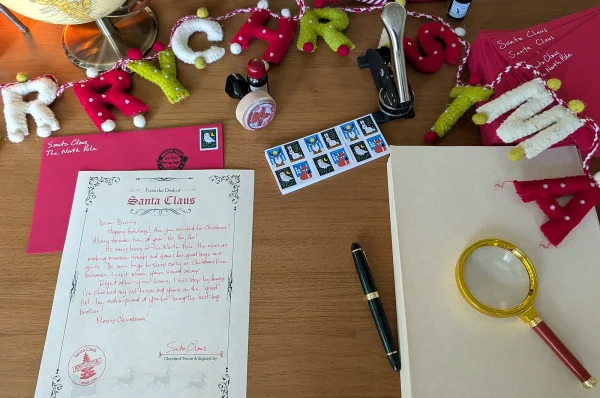
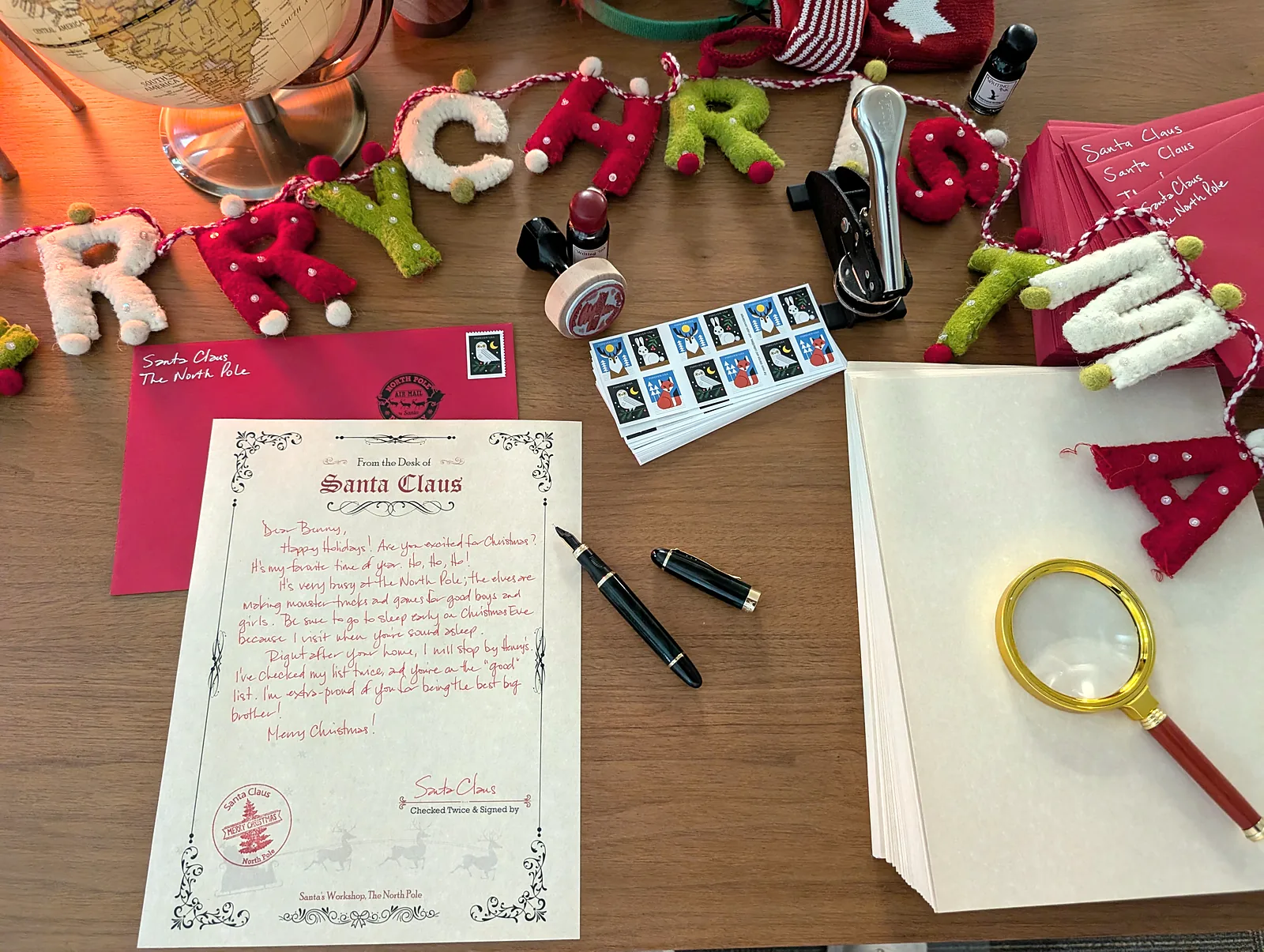
We also handwrite Santa’s letters, which is how we ended up thinking this hard about one particular question. Here’s what works.
The one move that works at every age
Answer the question with a question. Every single time.
“Do you think he’s real?”
That’s it. That’s the move.
It isn’t a dodge. It hands the question back to the only person who can actually answer it, and it tells you exactly where your child is. A five-year-old fishing for reassurance and a nine-year-old who already knows are asking the same words for completely different reasons, and you can’t tell which until they talk.
So ask, then be quiet. The silence is uncomfortable. Sit in it anyway. Kids fill silence with the truth.
Ages 3 to 5: “Is Santa real?”
They’re not doubting. They’re checking. Something at daycare rattled them and they want you to put it back.
“What do you think?”
Then agree with their delight, and keep it short. At this age the question is a hug, not a philosophy exam.
Ages 6 to 7: “How does he get to every house?”
This isn’t doubt either. This is a brain that just discovered logistics. Treat it as a compliment.
“That’s a really good question. How do you think he does it?”
Let them build the theory. Kids defend their own explanations far harder than they’ll ever defend yours.
Ages 8 to 9: “Someone at school said it’s the parents”
Here we go. This is the real one, and it’s where most parents panic and either over-explain or fold.
“Some people believe and some people don’t. What do you believe?”
If they push (“but is it TRUE?”), don’t lie, and don’t cave:
“I believe in Santa. I believe in what he stands for, and I’ve seen what he does. Do you want to keep believing?”
Almost every child at this age says yes. What they’re actually asking is am I allowed to still want this.
The part most parents get wrong
Unlock the script for the child who already knows, plus the printable cheat sheet.
Free. Put in your email and this section opens right here. The full guide and the printable cheat sheet land in your inbox too.
Ages 10 and up: “You buy the presents, don’t you?”
They know. They’re not asking for information. They’re asking whether they’re about to get in trouble for growing up, and whether the magic they loved was a joke on them.
Don’t confess. Promote them.
“You figured it out. That’s what happens to everybody eventually. So now you get the better job. Santa isn’t one man. He’s everyone who keeps the secret and makes the magic for someone smaller. You’re on the inside now. Want to help me do it for your sister?”
This is the most important paragraph here. Handled this way, the day they stop believing becomes the day they got promoted, not the day they found out they’d been lied to. Kids remember which one it was for the rest of their lives.
If you are already past this point and the belief has gone, we wrote a separate piece on what to do when your kid stops believing in Santa.
What not to say
- “Of course he’s real!” Flat, defensive, and the moment they find out it retroactively becomes a lie. Believe in Santa out loud; don’t swear to facts you’ll have to walk back.
- “Don’t be silly.” It shames the question, so the next one goes to a friend instead of you.
- “Well, actually…” followed by the full confession, because you got flustered. Nobody asked for the whole thing. Answer the question they asked.
- “If you don’t believe, you don’t get presents.” It turns the warmest story of their childhood into a threat.
The bit nobody tells you
You’re not going to get one clean moment. Kids believe and doubt at the same time, sometimes for years, and a child who “knows” will still leave out the cookies.
That isn’t confusion. That’s a child choosing to play, which is a more sophisticated act than believing ever was. Let them. Don’t make them declare a side.
The cheat sheet
| They ask | You say |
|---|---|
| Is Santa real? | Do you think he’s real? |
| How does he do it all? | That’s a great question. How do you think? |
| A kid at school said… | Some people believe, some don’t. What do you believe? |
| But is it TRUE? | I believe in Santa, and in what he stands for. Do you want to keep believing? |
| You buy the presents, right? | You figured it out. Want to help me do it for someone smaller? |
One last thing
The reason this is worth getting right has nothing to do with Santa.
It’s that your child is running an experiment: when I bring my hardest question to this person, what happens? Every answer above is really the same answer: you can bring me anything and I will take it seriously.
That’s the thing they keep. Santa is just the first test.
If a letter is something you are considering, we also published an honest comparison of every way to get your kid a letter from Santa, including the free printables we tell some families to use instead. And if you would rather see how Santa’s mail lands before you commit, he also sends a free printed letter. Free letter, $6.99 shipping.
Which is honestly why we’re still doing this. A handwritten letter from Santa is a small thing. But for a lot of kids it’s the first time anyone tells them, in writing, that someone noticed they did something good. Six years and four hundred-odd hours into making a podcast about how people actually communicate, Eldar keeps landing on the same place: it starts at home, and it starts earlier than anyone thinks.
We think there’s a great deal more to do with that than one letter in December. We’re not selling you that yet, because it doesn’t exist yet. But it’s where we’re going, and now you know why.
Eldar & Katherine, Santa Mailer