Every December, somewhere, a parent leans over a shopping cart and whispers “Santa is watching.” It works for about eleven minutes.
If you are looking for a naughty list letter from Santa, you probably have a kid who has been testing the Good List, and you want Santa to say what you have already said forty times, only with more authority and a better beard. Fair. Santa can do that. But the letter that actually changes a kid’s behavior is not the one most people write first.
Skip the threat. Put them on Santa’s map instead.
More than 100 kids are on Santa’s map. Is yours?
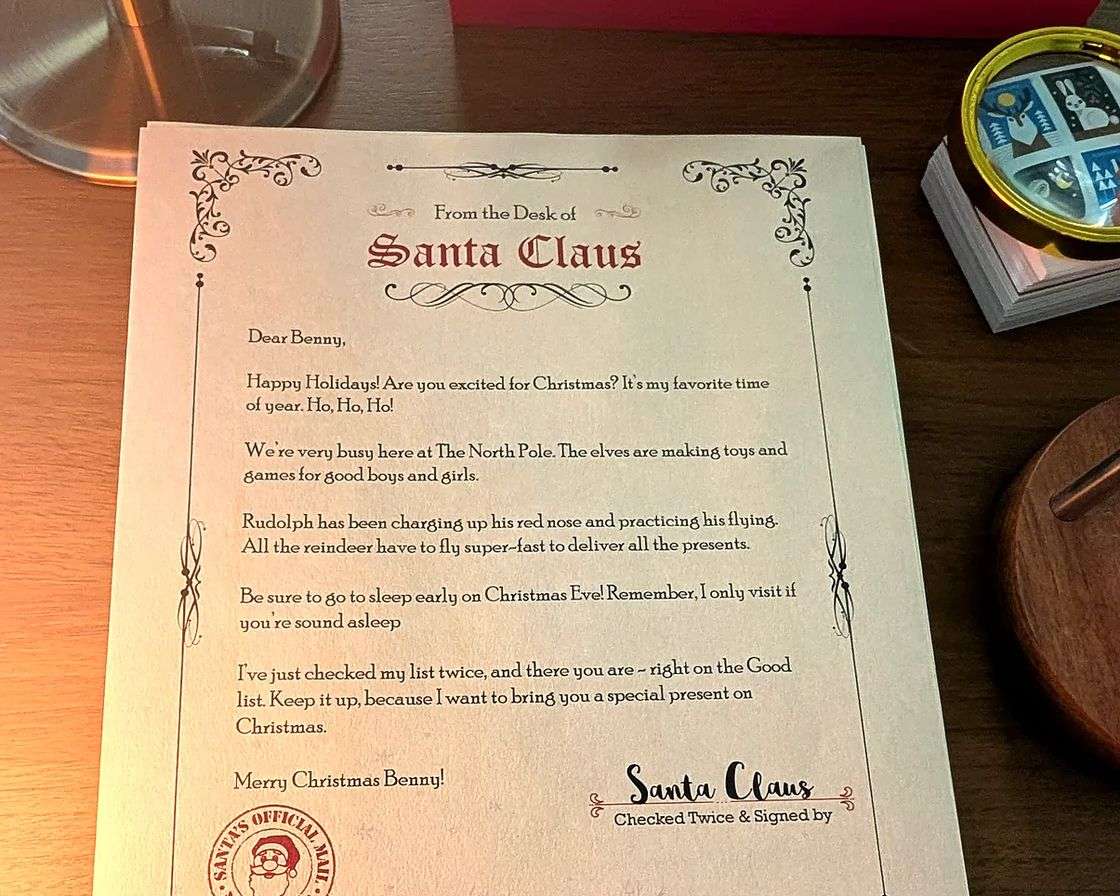
Free letter. $6.99 shipping.
Why the naughty list threat misfires
“You’re on the naughty list” feels like a power move. It is mostly a way to lose one.
- It turns Santa into a security camera. A kid who behaves because someone is watching learns to behave where the camera points. That is not good behavior. That is stealth.
- It is too big to fix. “Naughty” is a verdict on the whole child. A six-year-old cannot repair “being bad.” They can absolutely stop hiding their sister’s shoes.
- It is a bluff. Unless you are genuinely prepared to cancel Christmas, the presents show up on the 25th anyway, and your kid quietly files Santa’s threats under “decorative.” Next year’s threat is worth nothing.
- Scared kids behave for exactly as long as they are scared. Then the fear wears off, usually around the time the wrapping paper does.
The fix is not a nicer threat. It is a different job description. Santa is not the cop. He is the old guy who has seen a few hundred million kids and is very sure yours can do this.
What a good nudge letter does
- It names one thing. One. Specific, recent, fixable. “The shoes” beats “your attitude” every time, because nobody fixes their attitude by Tuesday.
- It talks about the choice, not the child. “I was sad when you hid your sister’s shoes” leaves the kid intact. “You were naughty” does not.
- It believes they can do it. Pair the problem with something real they did well. A kid who hears “I know you can, I saw you help at the bake sale” has a reason to try.
- It gives a small, concrete job. Not “be good.” Something with edges: “Say one kind thing to your brother every day until Christmas Eve.”
- It leaves the door open. “Not on the Good List right now” is a very different sentence from “on the naughty list.” One is a deadline. The other is a sentence.
That is how our Needs a Nudge letter is built: it tells the child they are not on the Good List right now, names the one thing, and asks for better choices so Santa can move them over. No coal, no cancelled Christmas. You can read the full text in our sample letters from Santa.
The phrase bank, by age
Steal one or two lines, not the whole list. A nudge letter with six corrections in it is a report card.
Ages 3 to 5
Little ones take Santa completely literally, so go gentle. Short sentences, one thing, lots of warmth.
“The elves tell me bedtime has been a little bumpy. I know you can climb into bed the first time Mom asks.”
“Gentle hands are my favorite kind of hands. Can you use yours with the baby this week?”
“Your brother loves it when you share the blocks. Try sharing them three times before Christmas. The elves would love to hear about it.”
“I am not worried about you one bit. I think you are almost there.”
Ages 6 to 8
This is the age of rules and fairness. They want to know exactly what counts. Give them a job with a number on it.
“You are not on the Good List yet, but you are close enough that the elves wrote your name in pencil.”
“I heard some mean words at the dinner table. That is not the Sam I know. Your job: one kind thing to your sister every day until Christmas Eve.”
“Everybody makes a bad choice sometimes. Even elves break toys. The good ones fix them.”
“Homework first, tablet second. Try it for one week and tell your dad how it went.”
Ages 9 to 11
Respect the brain. Kids this age smell a lecture from across the room, and some of them are already running the math on Santa (if that is your kid, read what to say when your kid asks if Santa is real first). Talk to them like someone you trust.
“I am not going to lecture you. You already know what the problem is, which puts you ahead of most grown-ups.”
“Losing your temper at practice happens. Apologizing to your teammate the next day is the part I would love to hear about.”
“I think you are ready for a bigger job this year: looking out for the younger kids in your house.”
“I trust you to fix this one on your own. I do not say that to everybody.”
What never goes in a nudge letter
- Shame. No “bad boy,” no “naughty girl,” no “you are a disappointment.” Criticize the choice. The kid stays on the team.
- Sibling comparisons. “Your sister is on the Good List” does not create a better kid. It creates a rival, and it makes your other child Santa’s informant. Enjoy that dinner table.
- Threats about presents. No coal, no “the elves stopped building your bike.” You will not follow through, and they will remember that you didn’t.
- Anything humiliating. Bedwetting, accidents, thumb-sucking, their body, a grade they are ashamed of. Kids show their Santa letters to friends, cousins and the entire bus. If it would make them cry to have a friend read it, it is not Santa’s business.
- The full rap sheet. One thing. If you list five, the kid hears “Santa thinks I’m bad” and stops reading.
How to deliver it: the mailbox beats the pillow
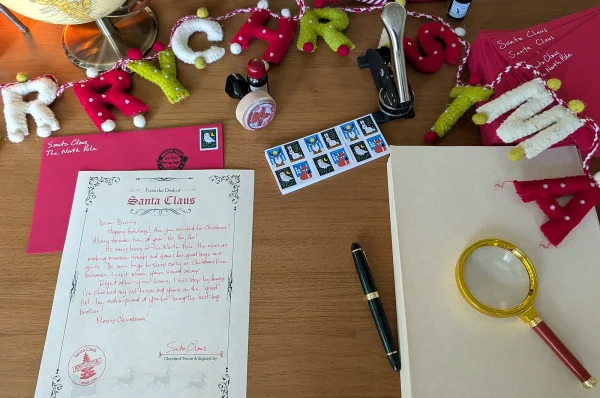
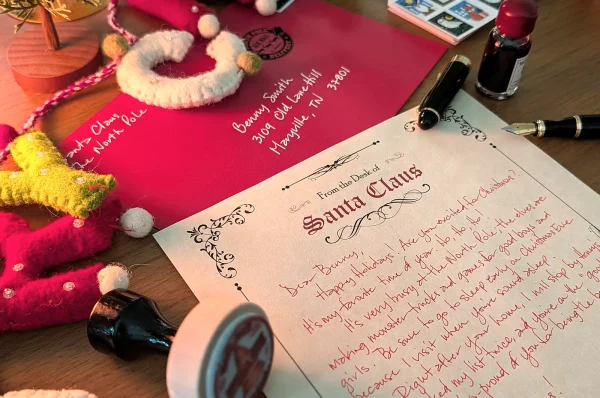
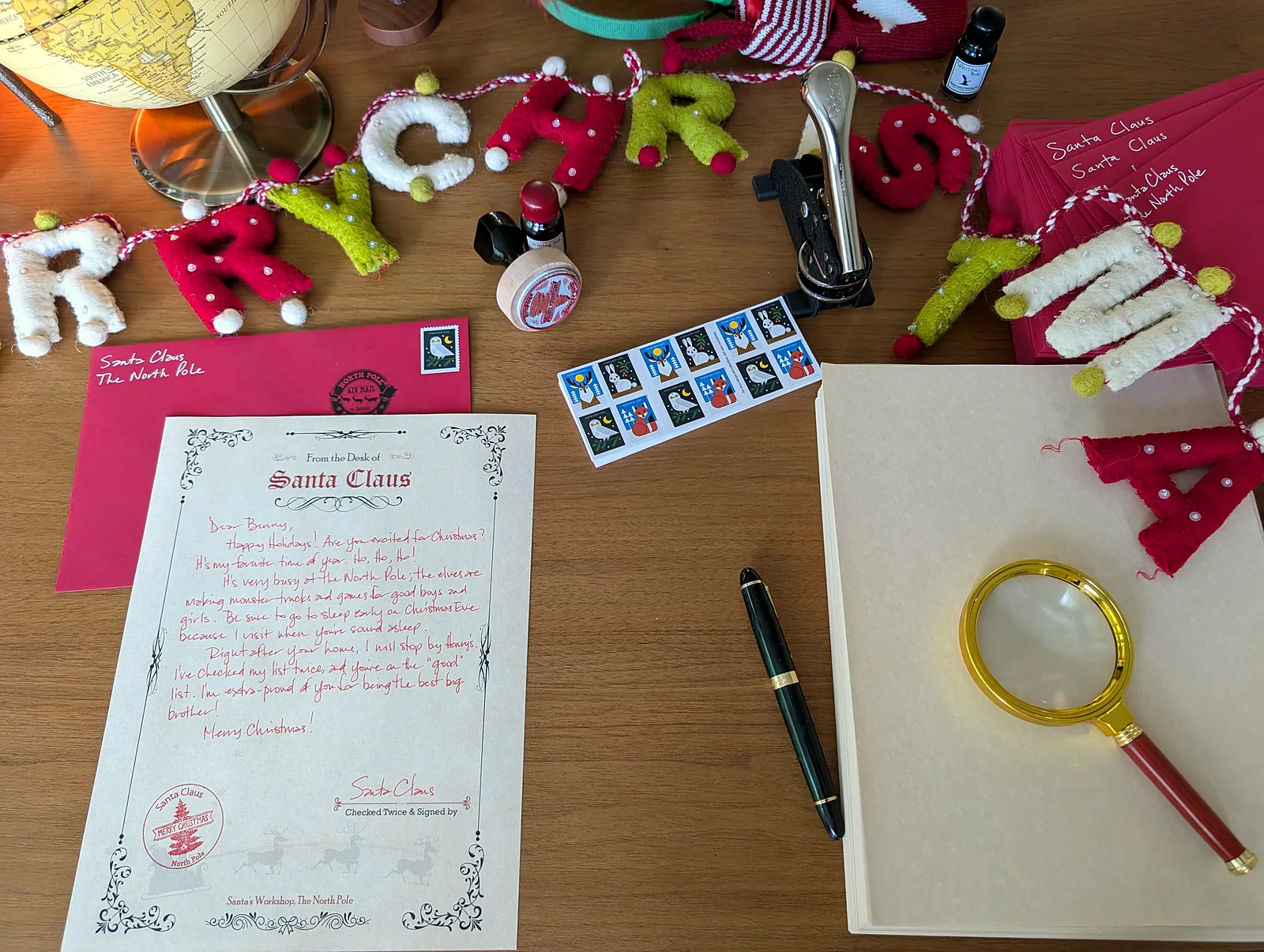
A note on the pillow comes from inside the house, and your kid knows exactly who has access to the pillow. A red envelope in the actual mailbox, with their name on it, a stamp and a North Pole return address, came from somewhere else. That is the difference between “Mom is mad” and “Santa knows.”
Timing matters as much as the words. Send it early in December, so there are weeks to do the job and be noticed doing it. A nudge letter that lands on December 23 is not a nudge. It is a verdict.
Then do the part the letter can’t: when they do the job, say so out loud. “I bet the elves saw that.” Santa starts it. You finish it.
And if you are writing the letter yourself, do not use your own handwriting. Your kid has seen it on a few hundred permission slips. Here is what Santa’s handwriting really looks like and how to disguise yours.
Questions
Is it okay to tell my kid they are on the naughty list?
“Not on the Good List right now,” with a clear way back, is fine. A final verdict with no way out is a threat, and threats stop working the moment the kid calls the bluff.
What age is a nudge letter for?
Any age that still believes. For the youngest, keep it to one gentle line. For 9 to 11, drop the magic a notch and speak to them as someone you trust.
Should the letter mention everything they did wrong?
No. One thing, the one you most want to change.
What if they don’t improve?
Christmas still happens. The letter was a nudge, not a contract. Keep noticing the small tries out loud, and the next letter can say Santa saw them.
Can the letter mention the specific thing my child did?
In the handwritten letter, you can tell Santa: the order form has a line for something they did that you were not happy about, and one for something you are proud of them for. The free printed letter is personalized with their first name only, so the wording is the standard Needs a nudge text.
Let Santa send the nudge
Pick “Needs a nudge” when you order, and the letter arrives in a red 6×9 envelope, hand-addressed in white Christmas ink, with a North Pole return address and a real stamp.
- The free printed letter: printed, with your child’s first name, in the same hand-addressed red envelope. Free letter. $6.99 shipping. Start with the free letter.
- The handwritten letter: every word written by hand in red ink on cream parchment, with their name, their best friend’s name, what they are hoping for, and something they did this year worth noticing. $39.99, shipping included. Order the handwritten letter.
The handwritten letter comes with our Before-Christmas Guarantee: order by December 12 and it arrives before Christmas, or you get your money back (US addresses).