It usually happens on a weekday. They come in, drop the backpack, and say it almost casually: “Tyler says Santa isn’t real. He says it’s just parents.” And then they look at you.
Nobody warns you about this moment. There’s no letter from school. You just suddenly have about four seconds to decide how childhood goes from here, while your kid reads your face like a polygraph.
Here’s the thing nobody tells you: this moment is almost never a conclusion. It’s a test. A kid who had truly decided wouldn’t ask. They’d just quietly stop mentioning it, the way they quietly stopped mentioning their imaginary friend. The question means the door is still open, and they’re asking you to help them keep it open, because Tyler scared them and they don’t WANT Tyler to be right.
So here’s the playbook. It’s the one I’d want handed to me.
1. Never answer the yes/no question. Return it.
We have since written the word-for-word version of this: exactly what to say when your kid asks if Santa is real, with scripts for every age.
“What do you think?” is the entire move. It buys you information: a kid who answers “I think he’s real, Tyler’s just mad he got socks” needed permission to keep believing, and you just gave it. A kid who lays out a careful case with evidence is somewhere else entirely (see #5). You cannot pick the right response until you know which kid is standing in front of you.
2. Understand what age you’re dealing with
Somewhere around six or seven, kids turn into tiny scientists. They stop believing on authority and start believing on evidence. This is why “because I said so” suddenly stopped working on everything else too. It’s not defiance. It’s development. And it means the belief can no longer be argued back into place.
It has to be evidenced back into place.
3. Evidence beats argument, every time
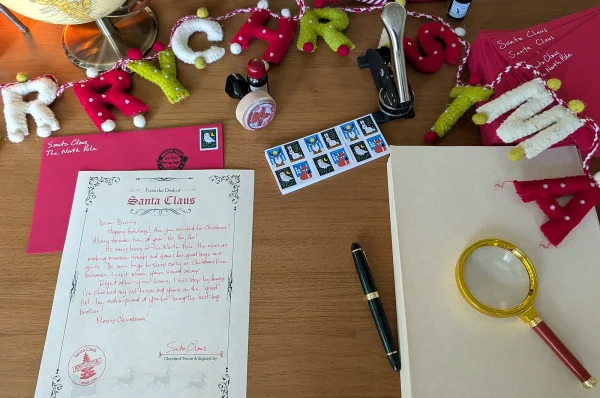
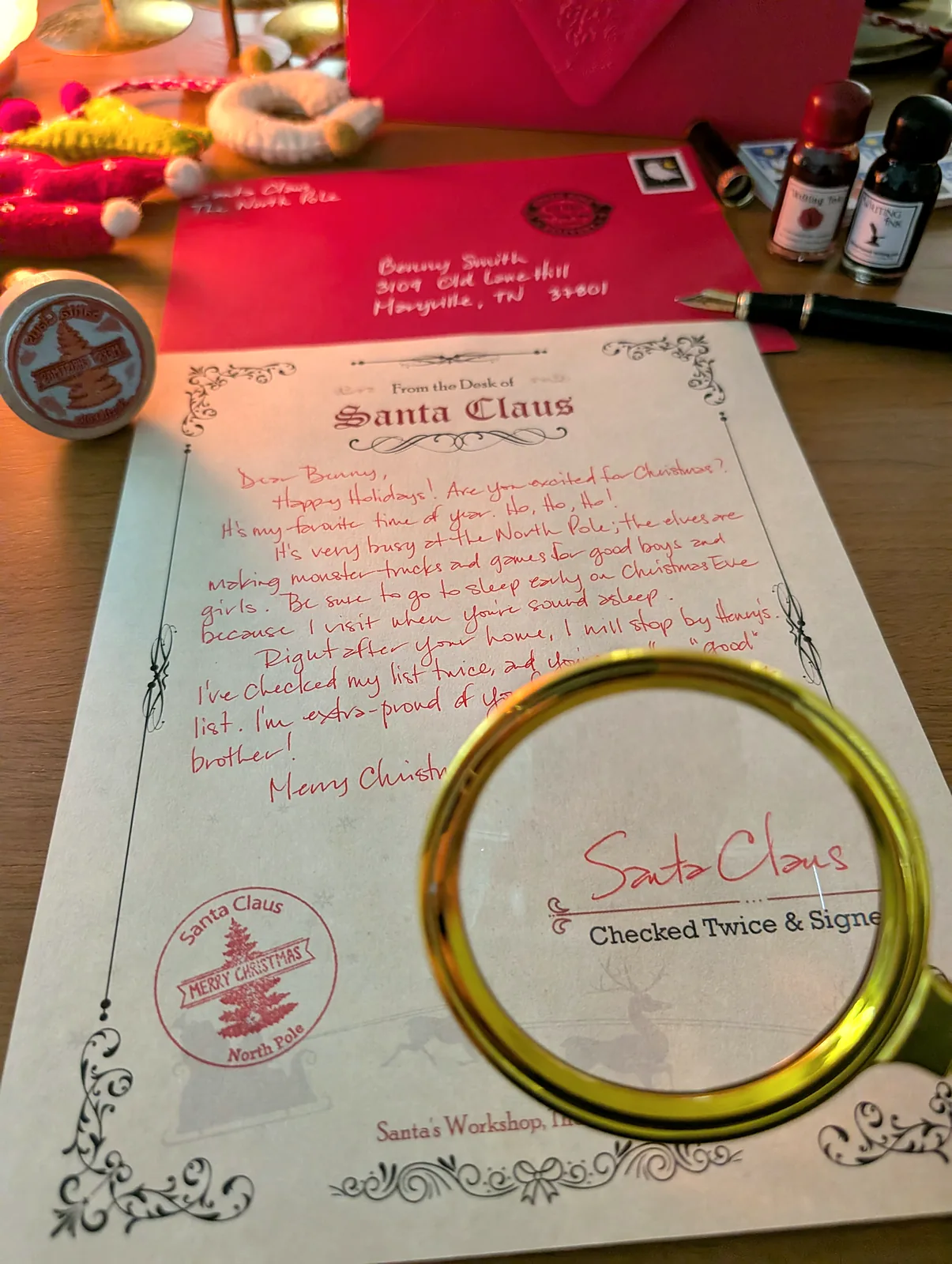
You cannot debate a seven-year-old back into believing. But the mailbox can do what you can’t. A doubting kid who receives a real letter, in real handwriting, that knows their best friend’s name and the thing they’re hoping for, has to explain that evidence somehow. And “my mom hired a company” is not usually the first theory of a seven-year-old. “He’s REAL, I have PROOF, it came in the MAIL” usually is.
The critical detail: the evidence has to survive inspection. This is the age that notices fonts, recognizes printer paper, and compares your handwriting to Santa’s. A printed letter at this age can backfire spectacularly; it can be the exhibit that closes the case in the wrong direction. If you deploy evidence, it has to be the real kind.
(Yes, this is the part where I tell you our Doubting Santa letter exists. It’s genuinely handwritten, pen and ink, and it’s written for exactly this kid: Santa addressing the doubt himself, kindly, without ever being defensive about it. It’s the strongest card in our deck and the reason a lot of parents find us. Here is the handwritten letter from Santa, doubting version included. Now back to the free advice.)
4. Don’t over-defend
The fastest way to convince a kid something is fake is to panic when they question it. Casual confidence is the register: “Huh, Tyler seems sure. Weird, considering the letter.” Then change the subject. Innocent people don’t file appeals.
5. And when it’s actually over, let it be over, upward
One year, the evidence won’t be enough, and you’ll know. That kid isn’t losing the magic; they’re ready for a promotion. The move that works: tell them the truth as an induction, not a confession. They’re now IN on it. They’re Santa’s helper for the little ones, a keeper of the thing instead of a consumer of it. Kids take this deal almost universally, and take it seriously. The magic doesn’t die. It changes jobs.
The full script, free
Every answer, by age - in your inbox in a minute
This covered the big kid. The guide has the word-for-word answers for every age, including the 10+ who already knows, plus a printable cheat sheet.
The honest bottom line
You get maybe five or six Christmases of full belief, and you don’t get told which one is last. A letter can absolutely buy you another one; we’ve watched it happen across more than a thousand letters. But whether it’s evidence for the wobbling years or a graduation for the year after, the goal is the same: a kid who remembers the magic as something their family protected, not something that just stopped.
The letter for the kid who’s asking questions is here →
If this is the year you send one, check the mailing dates first. A letter that arrives late does a different job.